Contributions to Qualitative Methodology
My questions demand methods that do not yet exist. Studying how teachers' understandings of literacy and disability are historically produced, and how they change, requires approaches that can make history visible in the present and make reflection observable as it unfolds. This line of inquiry treats qualitative method itself as a site of design. Each project develops an innovative approach born from the needs of my research program and offered to the field.
A method for mapping historical professional identity renders the cultural-historical sources of teachers' professional selfhood as examinable artifacts. A proposal for Visual Thinking Strategies as research method makes critical reflection studiable in real time rather than in retrospect. These projects join the CHAT-organized systematic review in my Teacher Learning strand. Together they reflect a conviction that methodological innovation is not separate from theoretical commitment. It is how theory becomes empirically tractable.
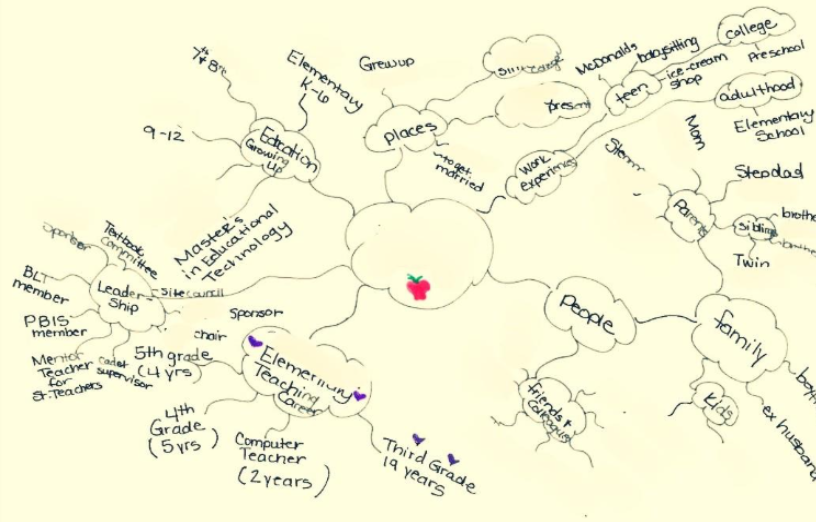
At the edge of a single life: Historical self-mapping and the temporal horizon of professional identity · Under review
If teachers' understandings of literacy and disability are historically produced, then studying them requires methods that can make history visible in the present. Conventional qualitative approaches capture what teachers believe. Few can trace where those beliefs came from. The institutional encounters, cultural schemas, and biographical turning points sedimented into professional identity over time remain out of reach.
This article introduces a method for mapping historical professional identity. It is a designed process through which teachers' identities are rendered as artifacts that can be examined, discussed, and analyzed. The method surfaces the cultural-historical sources of professional selfhood that interview talk alone leaves tacit. It is grounded in cultural-historical activity theory. Identity is treated not as a stable inner state to be reported but as a historically accumulated formation to be excavated. The map itself serves simultaneously as data, mediational tool, and occasion for reflection.
The method emerged from the needs of this research program. No existing approach could adequately trace how teachers' understandings of disability and literacy took shape across their histories. Its application extends to any inquiry into how professional identities are culturally and historically produced.
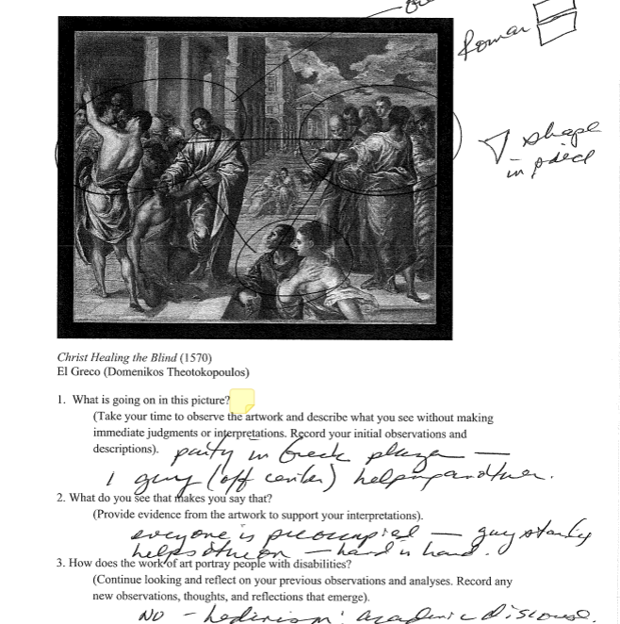
Visual Thinking Strategies: Observing Critical Reflection in Action · In preparation
Critical reflection is a process. Qualitative research mostly studies it as a product. Researchers analyze journals, transcripts, and retrospective accounts after the reflecting is done. What escapes these methods is reflection as it happens: the moment a taken-for-granted understanding is noticed, questioned, and begins to move.
This article proposes Visual Thinking Strategies (VTS) as a method for studying critical reflection in real time. VTS was originally developed in museum education. It structures collective interpretation of images through deceptively simple facilitation. What is going on here? What do you see that makes you say that? These questions create a dialogic space in which participants' interpretive schemas surface audibly, get tested against others' perceptions, and revise in the moment. Repurposed as a research method, VTS makes the ordinarily invisible work of critical reflection observable and recordable. Researchers can watch schemas about disability, literacy, and difference operate, encounter friction, and shift. They no longer need to reconstruct that movement from participants' reports after the fact.